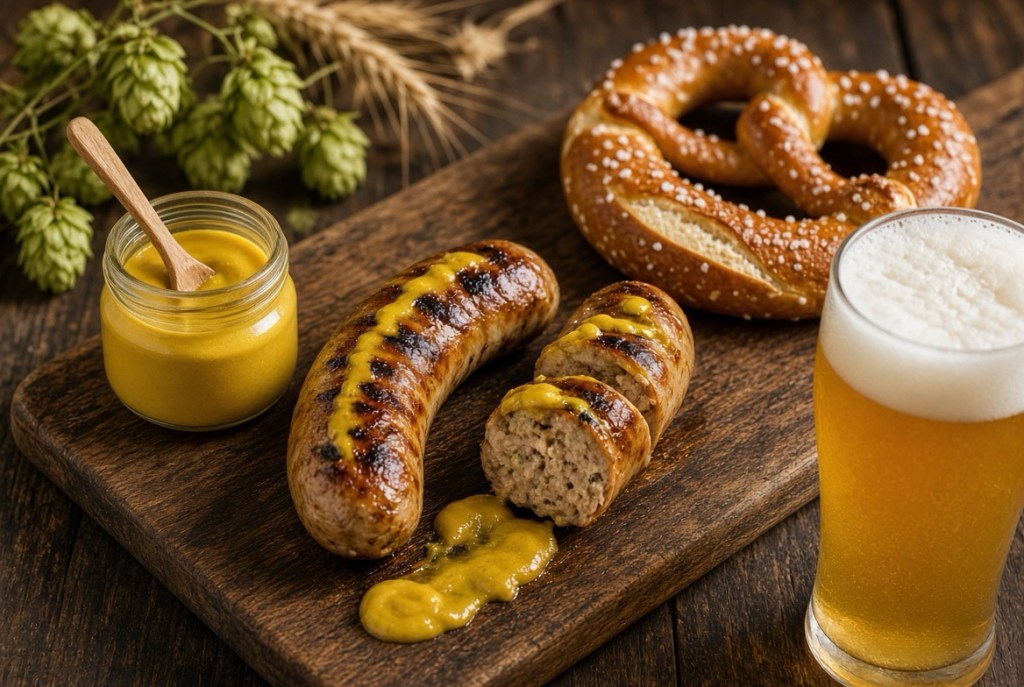
If you like wasabi, you already understand English mustard. That sharp, rising heat that hits the nose before it settles on the tongue is the same family of chemistry — not chilli burn, not Dijon tang. It’s volatile, fleeting, and oddly addictive. And it happens to be one of the best things you can put on a sausage, especially a bratwurst, especially in Oktoberfest season, especially with a tall cloudy weissbier.
What English mustard actually is
English mustard is not yellow American hot-dog mustard and it is not mellow Dijon. The classic version — Colman’s being the household name since Jeremiah Colman started milling in Norfolk in 1814 — blends white mustard seeds (Sinapis alba) with hotter brown seeds (Brassica juncea). The seeds are dehusked and milled to a very fine flour. Turmeric gives the famous sunshine colour. Prepared jars add water, salt, spice and a little acid to stabilize the paste; powder mixed with cold water about ten minutes before serving is even fiercer.
The heat comes from allyl isothiocyanate, the same pungent compound you get from wasabi and horseradish. Crush or wet the seed and an enzyme reaction releases a volatile oil that shoots up the nasal passages. Chilli heat sits on the tongue and lingers. Mustard heat spikes, clears the sinuses, then fades. That is why a little English mustard can wake up a rich sausage without burying it.
Why it works on bratwurst
German tables often reach for mittelscharfer Senf (medium-sharp) or Bavarian sweet mustard with Weisswurst. Those are excellent. English mustard is a different move: brighter, hotter, more nasal. Bratwurst is fatty, lightly spiced, and often grilled until the skin snaps. The mustard’s acidity and heat cut the fat the way a squeeze of lemon cuts a rich fish. You get contrast instead of another layer of sweetness.
Use it the British way: a modest smear, not a blanket. Too much and the heat dominates. The right amount makes the next bite of sausage taste meatier.
Good companions on the plate:
- Soft pretzel or crusty roll
- Braised red cabbage or sauerkraut
- German potato salad (warm, with bacon and vinegar)
- A little extra mustard mixed into crème fraîche as a dipping sauce
Wash it down with weissbier
Oktoberfest beer is often Märzen or Festbier — malty, amber, built for pretzels and roast pork. Weissbier (Hefeweizen) is the other Bavarian classic and a smart partner here. The beer is cloudy, lightly spicy with clove and banana from the yeast, and the carbonation plus the wheat softness rinse the mustard heat without fighting it. A slice of lemon on the glass is optional but welcome.
The pairing is simple: sausage, mustard, bread, wheat beer. No need to overthink it. If you prefer a Märzen, that works too — the malt stands up to grilled fat — but weissbier keeps the whole plate feeling festive rather than heavy.
A few ways to use it this week
On the sausage. Grill or pan-fry bratwurst until browned. Rest a minute. Split the roll, mustard first, then sausage. Add fried onions if you like.
Mustard cream. Stir a teaspoon of English mustard into sour cream or crème fraîche with a pinch of salt. Spoon over sausages or grilled pork.
From powder. Mix Colman’s (or similar) powder with cold water to a thick paste. Leave 10 minutes. Heat peaks then settles. Freshly mixed powder is hotter than the jar.
Not just sausages. Roast beef is the traditional British pairing. It is also excellent with ham, pork chops, and smoked fish.
A small warning, and a recommendation
English mustard is not “mild with a bit of kick.” Treat the first taste like wasabi: a little, then more if you want it. Keep the jar in the fridge once opened. Powder keeps longer in a tin.
If you already hunt down real wasabi instead of the green-dyed horseradish tubes, you will likely enjoy this. Same family of heat, different kitchen. This Oktoberfest, skip the sweet squeeze bottle for one meal and put a proper English mustard next to the bratwurst. Raise the weissbier. The combination is louder than it looks — and that is the point.


Leave a Reply