
People often assume The Cure’s early records are full of drum machines. Mostly they aren’t. Lol Tolhurst played a real kit on the early albums, recorded in a way that made it sound cold and machine-like. A drum box only shows up properly from 1981, and then it shapes some of the band’s darkest and poppiest moments. Here’s what I could pin down, record by record, and what’s still guesswork. Then we’ll look at how to get that sound in your own songs.
Seventeen Seconds: real drums that sound like a machine
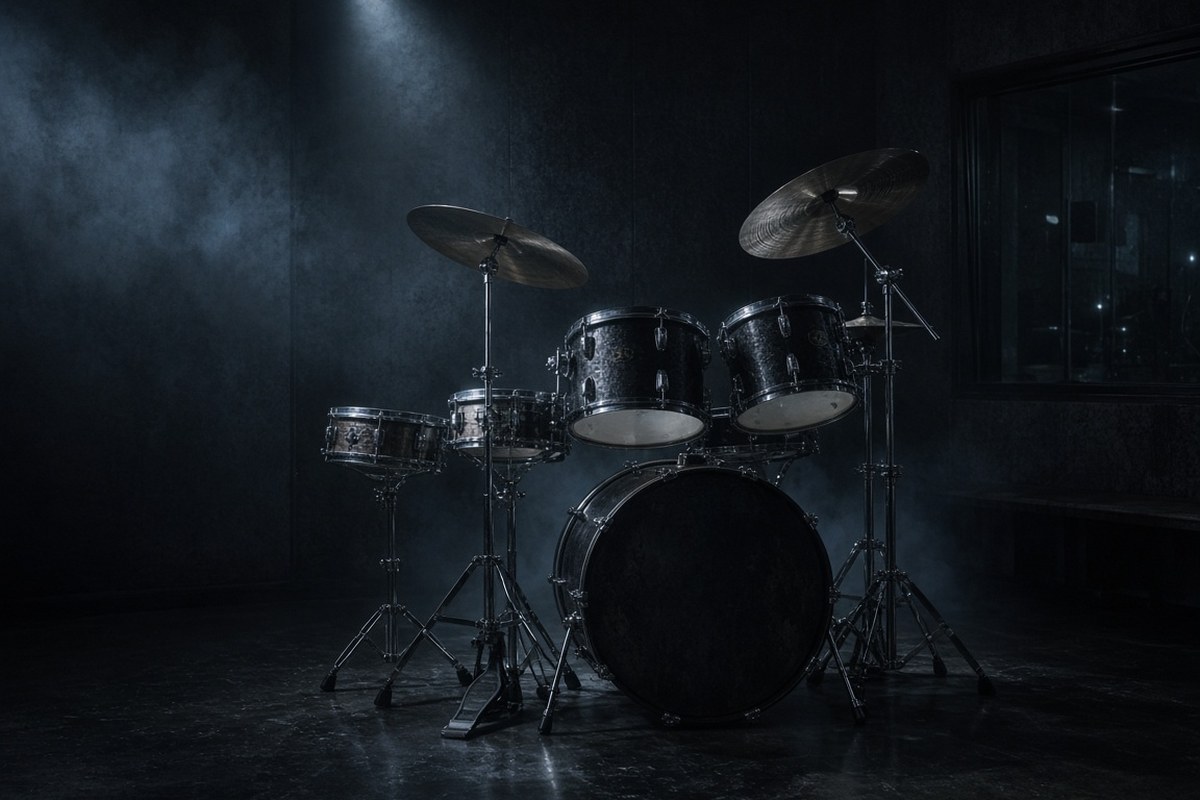
If you’ve ever thought the drums on Seventeen Seconds (1980) sound programmed, you’re not alone. They’re real. Producer Mike Hedges told Sound On Sound in 2004 that he miked the whole kit with the then-new C-ducer contact mics: kick, snare, hi-hat, three or four Rototoms and two crash cymbals. There was no spill between the drums and no room sound at all. Reverbs and delays added the space afterwards.
Hedges said the drums were “so sterile and cold” that they “really set up the mood we loved”. The cymbal overdubs went through three 1176 compressors in a row, so a crash on “Play For Today” hisses on for ages. That’s the trick behind “A Forest”: a human drummer recorded like a drum machine.
Carnage Visors and the Boss DR-55
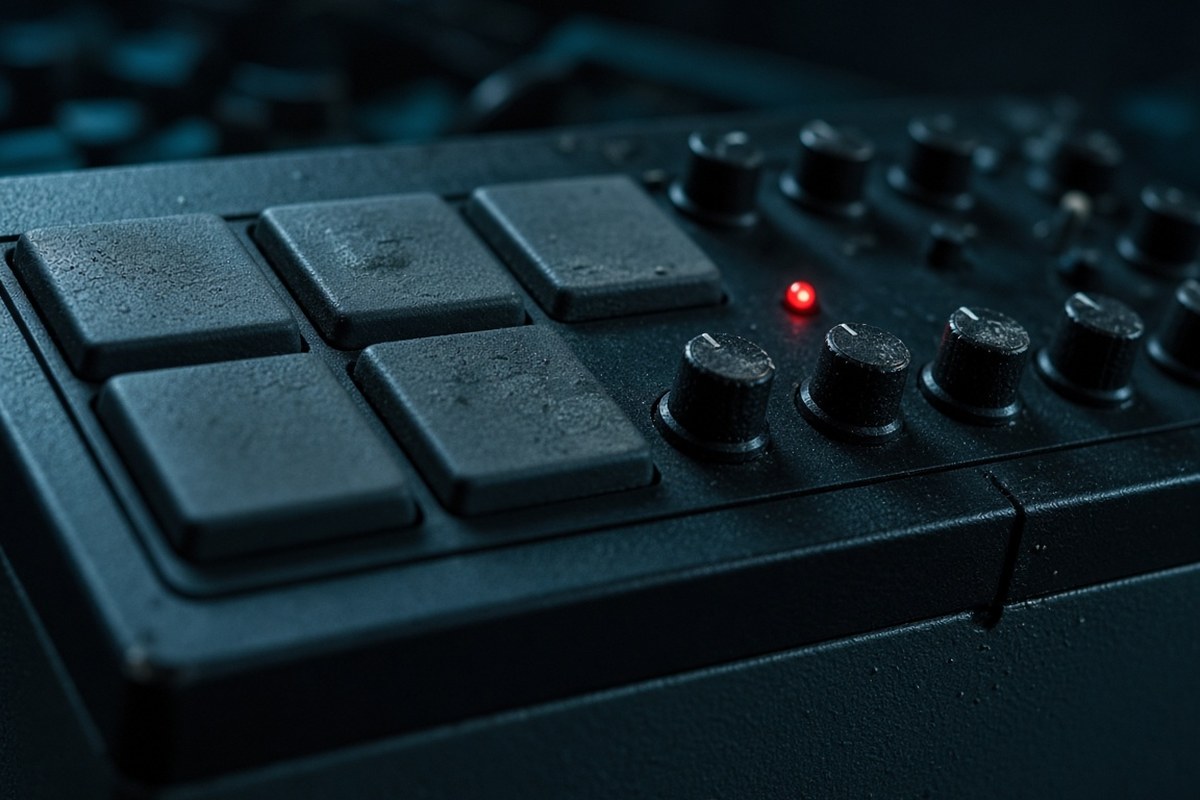
The drum machine story starts around 1981 with Carnage Visors, the instrumental film soundtrack the band played before their shows on the Faith tour. Fans and gear forums widely identify the machine as a Boss DR-55 Dr. Rhythm, the same cheap box that started the Sisters of Mercy’s Doktor Avalanche. I couldn’t find the band confirming this in print, so treat it as the strong consensus rather than gospel. Either way, it fits the sound: a dry, ticking pattern that repeats for nearly half an hour.
Faith itself is still mainly Lol on a real kit, with that same flat, close, hypnotic feel.
Pornography: “One Hundred Years”
Pornography (1982) opens with “One Hundred Years”, and that pounding, distorted beat is the clearest drum machine moment on the band’s early albums. Most accounts point to the DR-55 again, heavily processed and possibly played through an amp in a room. Some people think a real snare is layered on top. That isn’t documented, so I’ll just say it sounds enormous. The rest of the album is mostly live drums.
Let’s Go to Bed and The Walk: the Oberheim years
After the Pornography tour, Simon Gallup left, and The Cure were briefly just Robert Smith and Lol Tolhurst. Lol moved from drums to keyboards and drum programming. “Let’s Go to Bed” (1982) is clearly built on a machine, but I couldn’t find a reliable source saying which one, so I won’t guess.
“The Walk” (1983) is better documented. The single’s credits list Lol on Oberheim DMX drum machine and DSX sequencer, with an Oberheim synth, under producer Steve Nye. The band hired in the Oberheim setup for the session. Interestingly, the DMX is also the box that powered the Sisters of Mercy’s First and Last and Always. You can hear the tracks from these sessions on the compilation Japanese Whispers.
Lol later told Keyboard magazine (1987) that drum machines were what turned him from drummer to keyboard player. He bought a Boss Dr. Rhythm, the DR-110 in that interview, and was fascinated that “you could actually play all the ideas you had in your head by just pushing some buttons.” By The Top (1984) and The Head on the Door (1985) the band had human drummers again, Andy Anderson and then Boris Williams.
How to get that sound in your own songs
- Kill the room, then add it back. The Seventeen Seconds trick works with any drum source: start bone dry (close mics, direct samples or a drum machine), then build the space with reverb and delay. That way you control exactly how big and how cold it feels.
- Loop and repeat. Early Cure beats rarely fill. Program two bars and let them run, while the bass carries the melody.
- Go cheap and dry for the dark stuff. For a “Carnage Visors” or “One Hundred Years” feel, use a DR-55-style kit: kick, snare, rim and hi-hat, nothing else. Then push it through an amp simulator or distortion and a big dark reverb.
- Go punchy for the pop stuff. For “The Walk” territory, use DMX-style samples, a busy sequenced synth line and tight, short reverbs.
- Squash the cymbals. Put a hard compressor (or two) on the crashes so they hiss and sustain.
If you’d like hardware, a Roland TR-06 or Behringer RD-6 will get you into the right family of sounds. I’ve written more about the little Roland in Gear Desk: The Roland TR-606 and Roland TR-606: Popular Users. For the wider era, see Post Punk Drum Machines and Other Gear. The full story of the DR-55, TR-606, DMX and beyond is in What Drum Machine Did The Sisters of Mercy Use? A Guide to Doktor Avalanche. And for mixing big dark drums under a vocal, there’s How to Write Goth Music II.
Where to start listening
Play Seventeen Seconds for the “fake machine” sound, then Carnage Visors and “One Hundred Years” for the cheap box at its darkest. Finish with Japanese Whispers for the Oberheim pop. If you know for certain what’s on “Let’s Go to Bed”, tell me in the comments.
Sources: Mike Hedges interview, “Classic Tracks: The Cure ‘A Forest’”, Sound On Sound (December 2004); Wikipedia, “The Walk (The Cure song)” and “List of the Cure band members”; Lol Tolhurst interview, Keyboard (August 1987), archived at musicfanclubs.org.


Leave a Reply